
The Local Commerce of Batangas by Jose M. Hilario, 1915
This page contains a transcription of an ethnographic paper written by one Jose M. Hilario in the year 1915. It is part of the Henry Otley-...

This page contains a transcription of an ethnographic paper written by one Jose M. Hilario in the year 1915. It is part of the Henry Otley-...
This page has been transcribed from an ethnographic paper written by one Jose P. Caedo in 1915. The page is archived at the digital librar...
This page has been transcribed from an ethnographic paper written by one Severino A. Garcia in 1927. The page is archived at the digital l...

The present-day municipalities of Malvar, Mataasnakahoy, and Balete were once part of Lipa. Their eventual separation from the old municipa...

The Municipality of Laurel, Batangas, did not emerge as an independent town in a single, straightforward act. Its territory passed through...

For much of the twentieth century, archaeological research in Batangas concentrated on the southwestern part of the province, particularly...

The religious history of Batangas during the Spanish colonial period was not the story of a single religious order exercising uninterrupte...
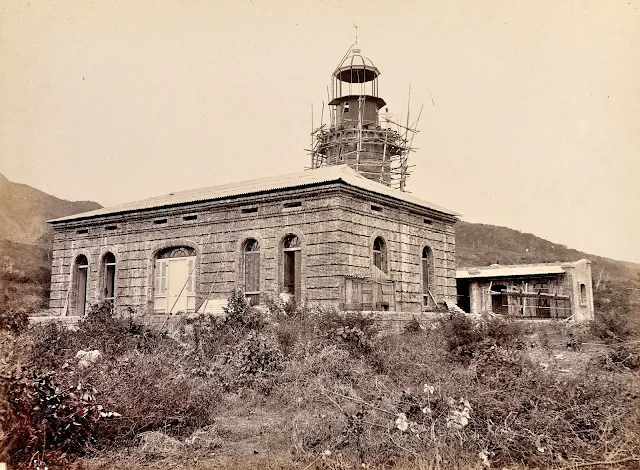
On the southern coast of Batangas, where the municipality of Lobo faces the Verde Island Passage, stands one of the province’s most remark...

The Metropolitan Cathedral of San Sebastian in Lipa is sometimes given a single construction date, but the surviving evidence tells a more...
![Wenceslao Retana’s “El Indio Batangueño,” a Translation [Part XI]](https://blogger.googleusercontent.com/img/b/R29vZ2xl/AVvXsEiJTCYoAZIcKx-DOHpbaYIN8ChqXpuFM19d7IF6lbQGtLHgheOxPGibm7kMRR5brYgaeSSF9cQQI5CTggY0XMDBBgO8L4tNdapbIrGeFp30DJStCKyiyY8erJLAE3rXrS6vMBenWmL7_qQnzNkRVmTtkErHPHVcnCcavmtaJcOyiE4B8zdR5Q-iuO2fJJs/s1600-rw/El-Indio.jpg)
Part I | Part II | Part III | Part IV | Part V | Part VI | Part VII | Part VIII | Page IX | Page X | Part XI This page is the...
Part I | Part II | Part III | Part IV | Part V | Part VI | Part VII | Part VIII | Page IX | Page X | Page XI This page is the...
Part I | Part II | Part III | Part IV | Part V | Part VI | Part VII | Part VIII | Part IX | Part X | Page XI This page contin...
Part I | Part II | Part III | Part IV | Part V | Part VI | Part VII | Part VIII | Part IX | Part X | Page XI This is the eigh...
Part I | Part II | Part III | Part IV | Part V | Part VI | Part VII | Part IX | Part X | Page XI This is the seventh installme...
Part I | Part II | Part III | Part IV | Part V | Part VI | Part VII | Part IX | Part X | Page XI This is the sixth installment...
Part I | Part II | Part III | Part IV | Part V | Part VI | Part VII | Part IX | Part X | Page XI This is the fifth instalment ...
Part I | Part II | Part III | Part IV | Part V | Part VI | Part VII | Part IX | Part X | Page XI This is the fourth instalment o...
Part I | Part II | Part III | Part IV | Part V | Part VI | Part VII | Part IX | Part X | Page XI This is the third instalment of...

In 1603, when Taal was still located in what is now San Nicolas, a fisherman named Juan Maningcad caught an image of the Our Lady of the I...
Part I | Part II | Part III | Part IV | Part V | Part VI | Part VII | Part IX | Part X | Page XI This is the second instalment ...
Part I | Part II | Part III | Part IV | Part V | Part VI | Part VII | Page IX | Page X | Page XI Beginning with this post, Bat...

The province now known as Batangas did not emerge immediately as a clearly defined political unit under Spanish rule. Its present form deve...

The story of the Minor Basilica of San Martin de Tours began in the settlement now known as San Nicolas, Batangas. Before the devastating ...

The Calatagan Pot is an earthenware vessel recovered in the late 1950’s in Calatagan, Batangas and later acquired by the National Museum o...

When Spanish expeditions reached the southwestern shores of Luzon in the late sixteenth century, they encountered not an empty frontier bu...

Batangas, one of the eight provinces that first rose in revolt against Spanish rule in 1896, was among the great contributors to the brief...

The reconstruction of pre-Hispanic religious life in Batangas faces a central limitation of the historical record: early Spanish chronicle...

Due east of the City of Lipa in Batangas is a mountain range that borders the city of Santo Tomas in Batangas, the municipality of Alamino...

By the end of the first decade of American civil government, Batangas had already endured a sequence of severe epidemic crises that shaped...

In prehistoric Southeast Asia, jade refers to a category of durable stone commonly shaped into necklaces, bracelets, adzes, beads, and the...

This document is another transcription of a chapter of the Spanish historian Manuel Sastron’s book “Batangas y Su Provincia 1 ,” published...

This continues the series in this web site on 19 th century Batangas based on the Spanish historian Manuel Sastron’s book “Batangas y Su ...

The arrival of the conquistador Miguel López de Legazpi in the Visayas in 1565 1 with a colonizing party of Spaniards, including missiona...

There is a long list of Batangueñas who left significant marks on Philippine history, and among them stands Maria Kalaw‑Katigbak, whose li...

This article traces the evolution of the people known as Batangueños — their origins, language, ethnic configuration, and culture — from t...

Long before Taal Lake as we know it today existed, in fact all the way back to prehistory, a massive volcano towered over the landscape of...

Sinaing na Tulingan is celebrated as one of Batangas’ heritage dishes, standing proudly beside lomi, goto, and bulalo 1 . The fish used i...

Among the folkloric etymologies of the name Batangas is that this was supposed to have been from the by-now archaic Tagalog batang , meani...

The fine hand‑embroidery known as Burdang Taal in the town of Taal, Batangas stands as one of the Philippines’ most refined textile‑craft...

The towns of Batangas Province in the Philippines, particularly Taal, Lipa, and Balayan, emerged as significant centers of Catholic educat...

Sugarcane has been part of Batangas agriculture since the Spanish period. In towns such as Balayan, Tanauan, and Bauan, farmers used backy...

In 1570, Spanish maestro de campo or master of camp (equivalent to Colonel in the present day) Martín de Goiti, the expedition commander...

The Manila-Acapulco galleon trade is often remembered through the image of giant ships anchored at what is now Cavite City or Manila Bay 1...

Balete is the third smallest geo‑political unit of the Province of Batangas. It is a lakeside town on the eastern shores of Taal Lake with...

The embroidered textiles of Taal, Batangas — collectively known in local parlance as Burdang Taal — occupy a distinct place in Philippine...

The Philippine Commission’s Act No. 74 established a centralized Department of Public Instruction in January 1901, creating the statutory ...

The coastal region of Batangas has long been recognized as a heartland of Tagalog settlement, yet its early history remains shrouded in am...

This article examines material, documentary, and contextual evidence of sustained contact between the Batangas coast and Bornean ports and...

In the years leading up to the Philippine Revolution, the town of Taal in Batangas became the site of a legal crackdown by Spanish colonia...